

Last Updated: November 17, 2026
Quick Summary
To maintain a consistent smoker temperature, control airflow with your intake vent as the throttle, keep the exhaust open, and use the Minion Method for long steady burns. Make small quarter-turn vent adjustments and wait before adjusting again, since charcoal responds slowly.
- A barrel smoker's sealed chamber and thick steel walls hold heat better than an open regular grill.
- Feed an offset firebox a small split or scoop of charcoal every 30 to 45 minutes.
- Thin blue smoke means clean combustion; thick white or gray smoke means a starved fire or wet fuel.
- Check for leaks around the lid seam and door edges with your hand once the smoker is at temperature.
- Calibrate your thermometer in boiling water before a big cook so you are not chasing a false reading.
Table of Contents
- Why Barrel Smokers Hold Temperature Better Than Regular Grills
- How to Control the Temperature on a Charcoal Smoker
- Offset Smoker Fire Management: Building a Clean, Steady Fire
- Smoker Top Vent Open or Closed? Setting Your Exhaust Correctly
- Charcoal Smoker Not Getting Hot Enough? Fix These 4 Problems
- Digital vs. Analog Control: Monitoring Pit Temperature Accurately
- Frequently Asked Questions
Why Barrel Smokers Hold Temperature Better Than Regular Grills
Consistent smoker temperature starts with why a barrel smoker wins before you light a fire.
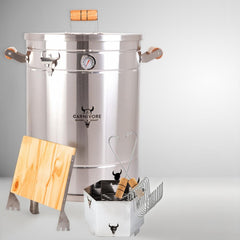
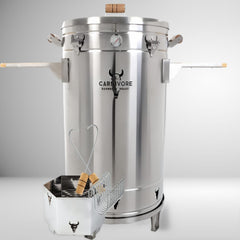
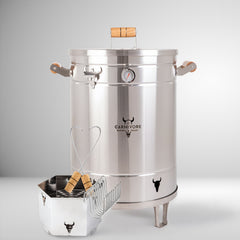
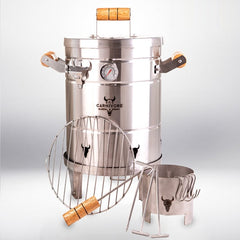
Barrel smokers made from food-grade 304 stainless steel are built around this principle. Steel walls hold heat, and a closed lid keeps it there.
- Thermal mass: Thick steel absorbs heat and releases it slowly, so spikes and dips even out.
- Sealed chamber: Less oxygen sneaks in, so charcoal burns at a steady rate instead of flaring.
- Indirect heat: Food hangs or sits away from the coals, so it cooks in moving hot air, not direct flame.
On a regular grill, you fight flare-ups, hot spots, and constant lid-opening. You can compare models side by side, and backyard cooks weighing the upgrade can read more on whether a premium barrel smoker is worth it.
How to Control the Temperature on a Charcoal Smoker
You control temperature on a charcoal smoker by managing three things: how much air reaches the coals, how much fuel is burning, and how much exhaust escapes. Get those three in balance and the pit holds steady for hours.
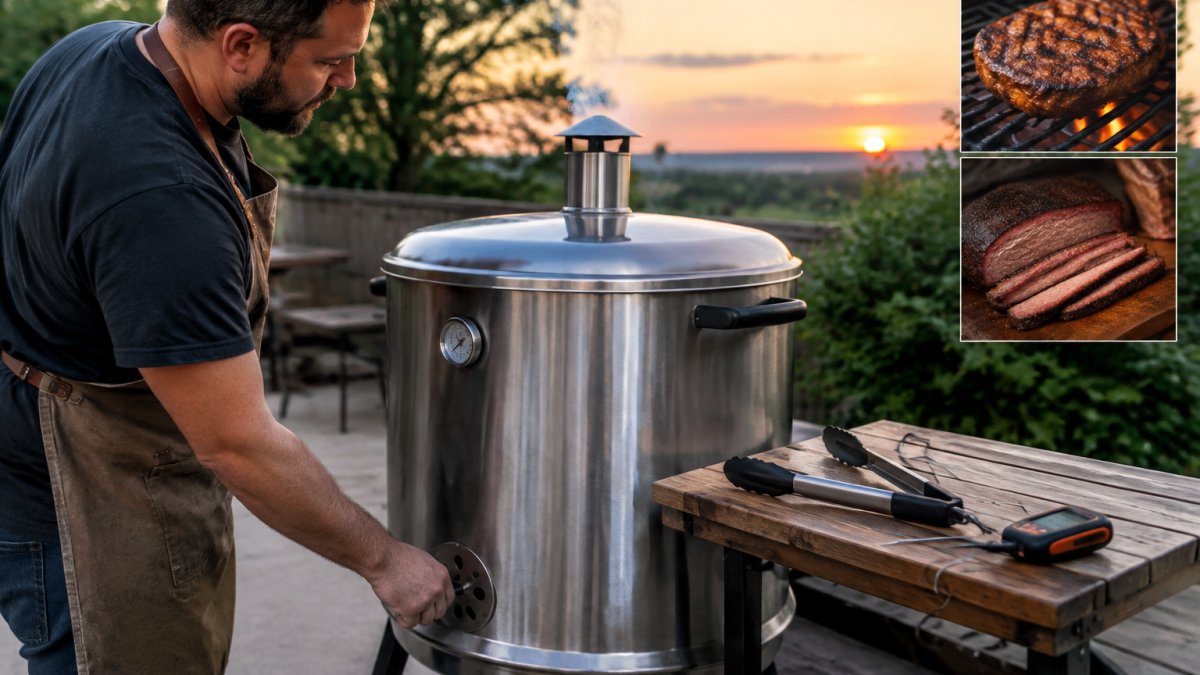
Most beginners chase the thermometer with fuel. That is backwards. Air is your throttle. Add oxygen and the fire grows; starve it and the fire shrinks.
Intake Vents: Your Primary Temperature Dial
The intake vent is the single most important control on your smoker. Open it wider to raise heat, close it down to lower heat. Make small moves, a quarter turn at a time, and wait before adjusting again.
A common mistake is fiddling every few minutes. Charcoal responds slowly, so give each adjustment time to show on the gauge.
The Minion Method for Long, Steady Burns
The Minion Method keeps a small fire burning slowly through a large bed of unlit charcoal. Fill the basket with unlit briquettes, then add a small chimney of hot coals on top. The fire spreads gradually, giving you hours of steady heat from one load.
This is the closest thing to set-and-forget in charcoal cooking. For the full walkthrough, read our guide on smoking meat without babysitting it.
Offset Smoker Fire Management: Building a Clean, Steady Fire
Offset smoker fire management comes down to building a small, hot, clean fire in the firebox and feeding it in small amounts.
Build your fire in a chimney starter, not with lighter fluid. Let the coals turn gray at the edges before you add them.
Watch the smoke, not just the gauge. Thin blue smoke means clean combustion. Thick white or gray smoke means the fire is starved or the fuel is wet.
Smoker Top Vent Open or Closed? Setting Your Exhaust Correctly
Leave the top vent open. A smoker exhaust should stay open during a cook so smoke and moisture can escape and fresh air can flow through.
Control heat with the intake, not the exhaust. The exhaust stays open, usually wide, and the intake does the fine-tuning.
A little smoke escaping is normal and healthy. If your exhaust is choked, the fire struggles and the meat tastes bitter.
How Intake and Exhaust Work Together
Think of your barrel smoker as a chimney. The intake feeds oxygen to the fire, and the exhaust stack creates draft that pulls air through the chamber.
Run the exhaust wide open and use the intake as your throttle.
Stack height matters too. A taller stack increases draft, pulling more air through and burning fuel hotter; a short stack draws less.
Symptoms of a Choked Exhaust
A closed or partially blocked exhaust does not announce itself. It shows up as symptoms beginners often misread as fuel problems:
- Temperature will not climb even with the intake wide open. The fire has oxygen at the bottom but nowhere for exhaust gas to go, so the draft stalls.
- Thick white or gray smoke that will not clear. Poor combustion from restricted airflow produces the heavy smoke that coats meat in creosote.
- Bitter, acrid flavor on finished meat. Creosote deposits from stale smoke taste like tar and cannot be cooked off.
Watch out: closing the exhaust to "hold heat in" trades temperature stability for stale smoke, and the meat will taste it.
When to Adjust the Exhaust
The exhaust is not a temperature dial, but it is not frozen in place either. A few legitimate reasons to move it:
- Windy days. A strong crosswind can push air back down the stack. Partially closing the exhaust on the windward side, or adding a stack extension, restores draft without starving the fire.
- Cold, damp weather. Damp air is heavier and drafts more slowly. Cracking the exhaust a bit wider can help maintain flow.
- Long cooks with heavy fuel loads. A large bed of charcoal produces more exhaust gas. Keeping the stack fully open prevents the chamber from pressurizing.
In every case, make the smallest adjustment that solves the problem and give it ten to fifteen minutes to show on the gauge. The exhaust is a coarse control; the intake is the fine one.
Exhaust Setup on a Barrel Smoker vs. a Regular Grill
A regular grill usually has no real exhaust control at all. Lid vents on a kettle grill are small and imprecise, and many gas grills vent through the back of the lid with no adjustment whatsoever. That is one reason a regular grill swings in temperature: you cannot balance intake and exhaust because there is no meaningful exhaust to balance.
Charcoal Smoker Not Getting Hot Enough? Fix These 4 Problems
A charcoal smoker not getting hot enough usually comes down to one of four culprits: blocked airflow, wet or old fuel, too little lit coal, or a cold, windy day pulling heat off the barrel. Work through them in order.
- Check the vents. Ash or debris can clog the intake. Clear it and confirm air is moving.
- Check the fuel. Damp charcoal or old briquettes burn weak. Switch to dry lump charcoal or fresh briquettes.
- Add lit coals. If the fire is small, light a fresh chimney and add it to the basket.
- Block the wind. Wind steals heat fast. Move the smoker behind a wall or shield the vents.
If temperature still will not climb, your videos, manuals and recipes can help you troubleshoot your specific model step by step.
A Symptom-to-Solution Table for Temperature Problems
Most guides tell you to check the vents and add charcoal. That advice is fine until it does not work, and then you are guessing. The table below maps what you are actually seeing to the most likely cause.
| What You See | Most Likely Cause | First Fix |
|---|---|---|
| Temp dropping but the fire looks big | Air leak pulling cold air in, or exhaust choked | Check lid and door gaskets; confirm exhaust is open |
| Temp climbs slowly and never reaches target | Wet fuel or too few lit coals | Switch to dry fuel; add a full lit chimney |
| Temp spikes then crashes repeatedly | Oversized fuel load or intake opened too far | Reduce fuel; close intake a quarter turn and wait |
| Temp holds low with intake wide open | Blocked intake, clogged charcoal basket, or heavy ash buildup | Clear ash; confirm air path from intake to fire |
| Temp fine at the gauge but meat cooks unevenly | Hot spot near the fire or poor circulation | Rotate food; check that the heat deflector is seated |
| Temp falls off after two hours | Fuel bed burned through on one side | Reload with the Minion Method layout |
| Temp will not rise on a windy day | Wind pulling heat off the barrel or back-drafting the stack | Shield the smoker; extend or rotate the stack |
The Leak Problem Nobody Talks About
A surprising number of "not hot enough" complaints are actually leak problems. If your smoker cannot hold heat, the chamber may be losing it faster than the fire can make it.
A simple test: light a small fire, let the smoker come to temperature, then run your hand slowly around the lid seam and door edges. Warm air escaping means heat you paid for in charcoal is going into the yard.
Wind, Insulation, and Cold-Weather Factors
Wind is the most underrated temperature killer in barbecue. A steady breeze pulls heat off the barrel faster than the fire can replace it, and a gusty day can drop pit temperature by tens of degrees without any change to your vents.
A few practical defenses:
- Position the smoker so the wind hits the side, not the intake or exhaust. A wall, fence, or garage corner works as a windbreak.
- Use a smoker blanket or welding blanket in cold weather. Insulation slows heat loss from the barrel walls and cuts fuel consumption noticeably.
- Expect longer heat-up times in cold, damp air. Damp air is heavier and drafts more slowly, so plan for extra time before the cook.
Thick-walled steel smokers generally hold heat better than thin-walled regular grills, which lose heat through every surface. Adding a blanket in winter extends that advantage through the coldest cooks of the year.
When to Stop Troubleshooting and Change the Setup
If you have cleared the vents, switched to dry fuel, added lit coals, blocked the wind, and sealed the leaks, and the pit still will not hold temperature, the problem is usually the cooker, not the cook. Thin-walled grills and leaky offset boxes have a ceiling on how steady they can run. A barrel smoker with a sealed chamber, thick steel walls, and a controllable intake and exhaust can provide the adjustment range needed to hold steady heat across a long cook.
Digital vs. Analog Control: Monitoring Pit Temperature Accurately
Digital and analog control differ in how precisely you can read and hold pit temperature.
| Control Type | Best For | Strength | Limitation |
|---|---|---|---|
| Analog dial | Quick checks, simple cooks | No batteries, tough | Less precise, slower to react |
| Digital probe | Long cooks, accuracy | Exact readings, trend tracking | Needs batteries, costs more |
| Digital controller | Set-and-hold cooks | Automates vent adjustments | Higher cost, more setup |
Whichever you use, calibrate your thermometer.
The barrel itself does a lot of the work here. If you want help pairing a thermometer with your setup, contact our team.
Consistent smoker temperature is not luck. It is airflow, fuel, and a chamber built to hold heat.
Carnivore U.S.A builds handmade barrel smokers from food-grade 304 stainless steel, backed by a lifetime rust warranty and free U.S. shipping.
Get started with Carnivore U.S.A and cook a whole feast over charcoal with steady, hands-off heat.
Frequently Asked Questions
How do I keep my smoker at a constant temperature?
Start with a full charcoal basket using the Minion Method, then adjust intake vents in small increments and wait 10-15 minutes before making another change. Keep the exhaust vent fully open so smoke and heat can flow. Thick steel walls resist temperature swings because of their mass. Check your thermometer against a known reading and monitor pit temperature at grate level rather than relying on a lid gauge alone.
Should the top vent on a smoker be open or closed?
Keep the top vent open. Closing the exhaust traps stale smoke and creosote inside the cooking chamber, which gives meat a bitter, acrid taste. Control temperature with the intake vents at the bottom, not the exhaust. A wide-open top vent maintains steady airflow and supports the thin blue smoke you want. If the pit runs hot, close the intake slightly instead of choking the exhaust.
Why is my charcoal smoker not getting hot enough?
The usual causes are clogged intake vents, wet or low-quality charcoal, a packed ash tray blocking airflow, or too little lit fuel to start. Clear the ash tray, open the intake vents fully, and confirm your charcoal is dry and stored properly. If the smoker still struggles, add a chimney of lit briquettes to the basket. Wind and cold ambient temperature also pull heat away, so a sheltered spot helps.
Is 350°F too hot for smoking meat?
350°F is above the low and slow range most barbecue calls for, but it is not unsafe. Poultry and some cuts cook well at 325-350°F for crisp skin. For brisket, pork shoulder, and ribs, aim for 225-275°F to render fat and collagen slowly. If your pit climbs to 350°F, close the intake vent halfway and let the temperature settle before adding more fuel.
